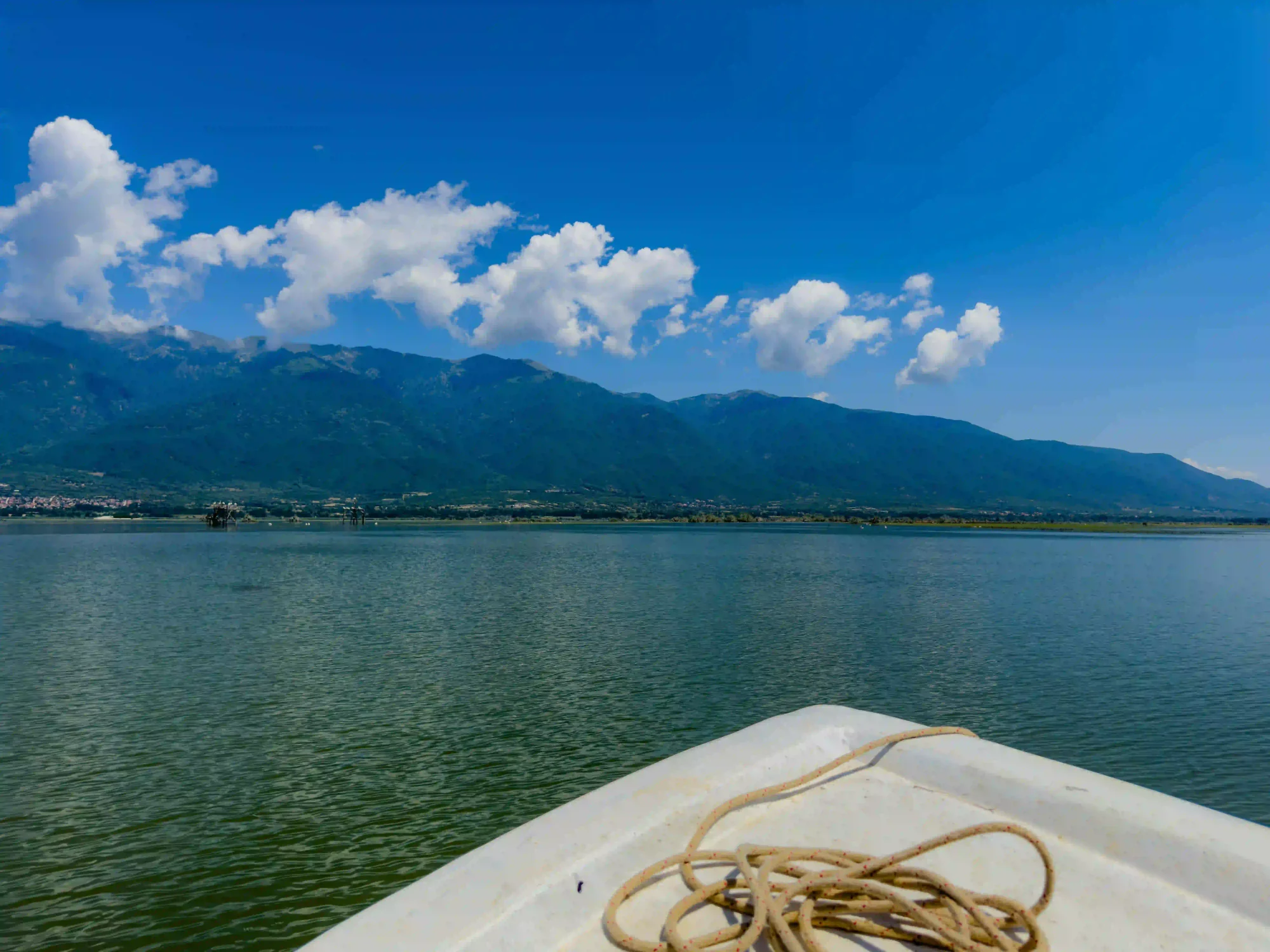
Lake Kerkini
A man-made wetland that became one of Europe's most important for birds. A short guide from people who live on its shores.
The lake in numbers
- dam built on the Strymonas
- 1932
- bird species observed
- 300+
- declared a National Park
- 2006
- Ramsar wetland of international importance
- 1975
- height of Mt Beles, on the Bulgarian border
- 2,031 m
- water buffalo, Greece's largest population
- ~4,000
A lake made by people
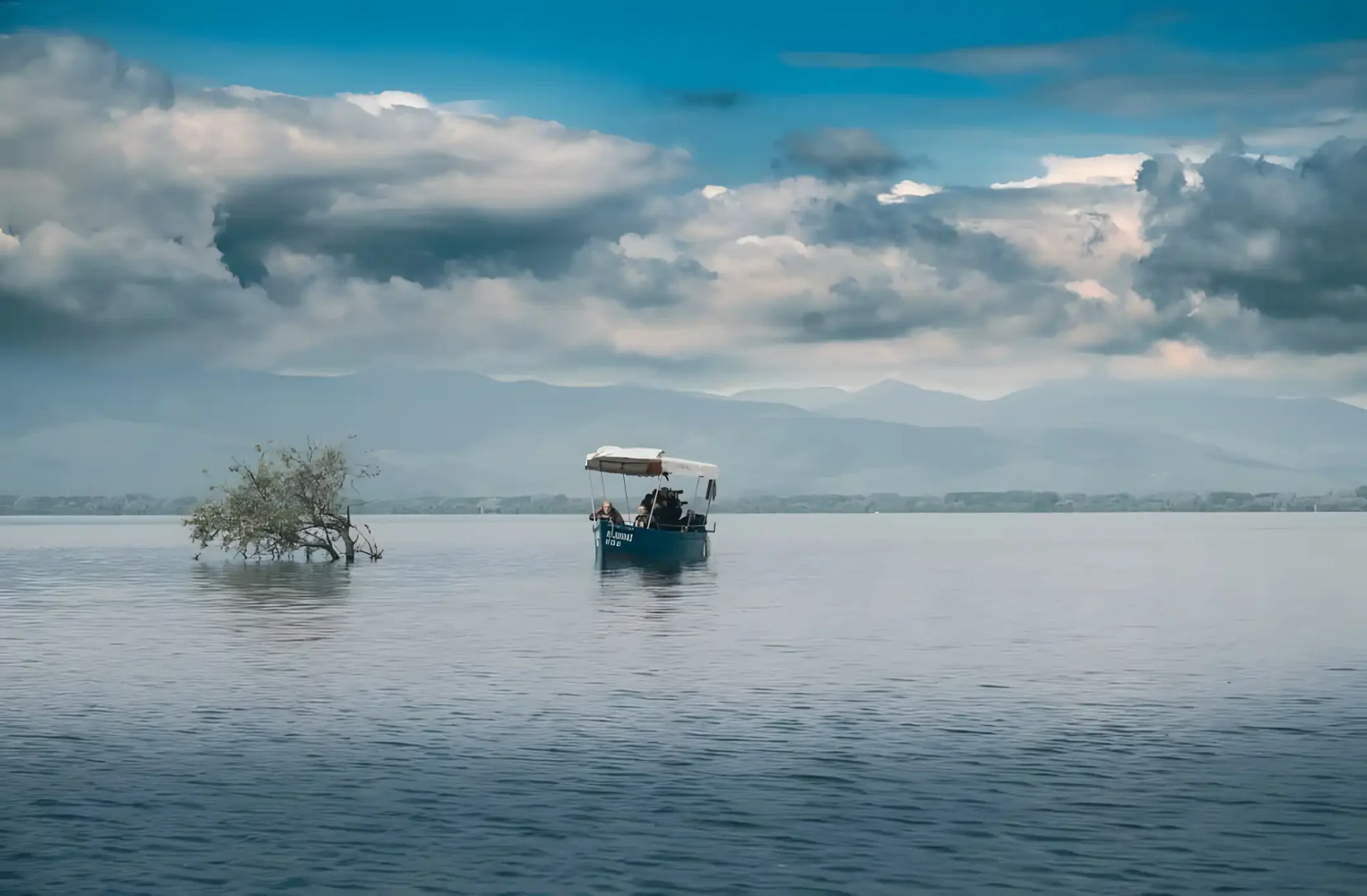
Lake Kerkini lies in the north-west of the Serres region. It was created in 1932, when a dam was built on the Strymonas with embankments to the east and west, to hold back the river's floods and irrigate the Serres plain. A small lake, Lake Boutkovo, once lay where it is now.
The Strymonas, worshipped as a god in antiquity, runs for about 410 kilometres, 290 of them in Bulgaria, and enters Greece through the Rupel gorge. The lake's level rises and falls with the seasons: over most of its area it is one to three metres deep.
Birds: more than 300 species
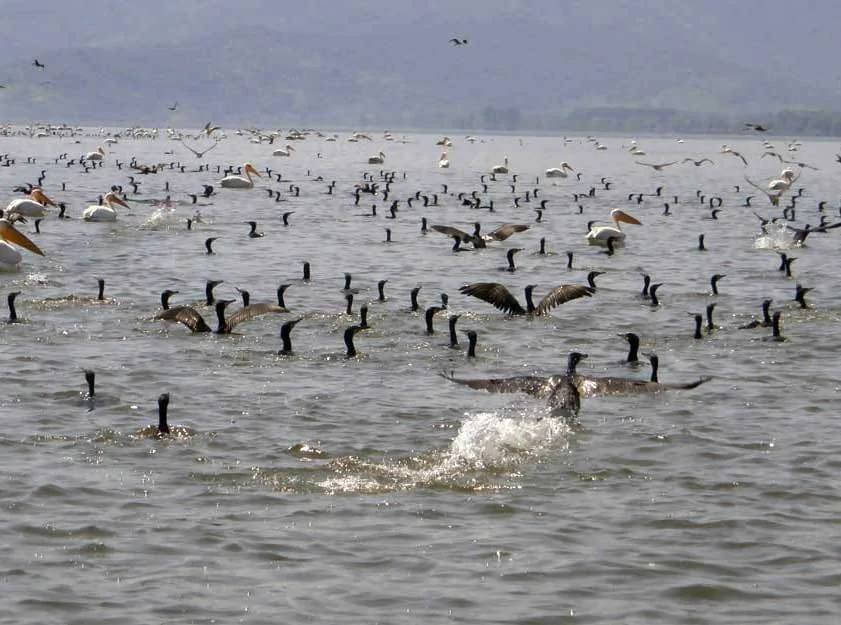
According to Greece's Natural Environment and Climate Change Agency (NECCA), more than 300 bird species have been recorded at Kerkini: 137 nest here, 134 winter here and 163 use it as a stopover on migration.
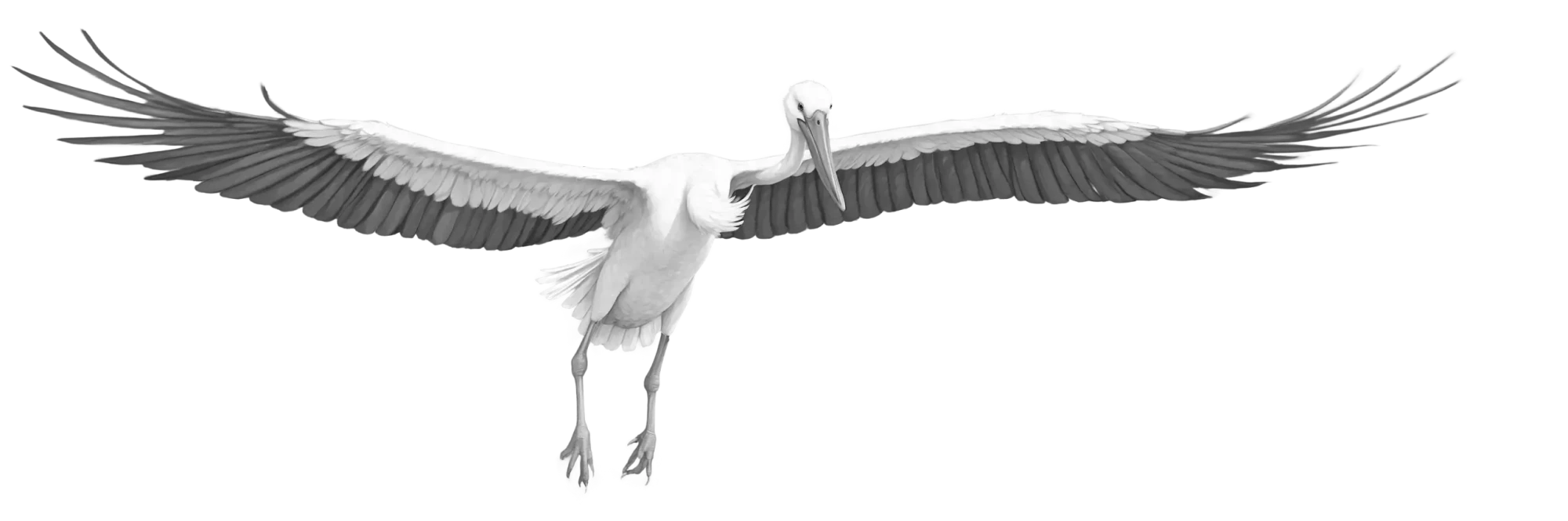
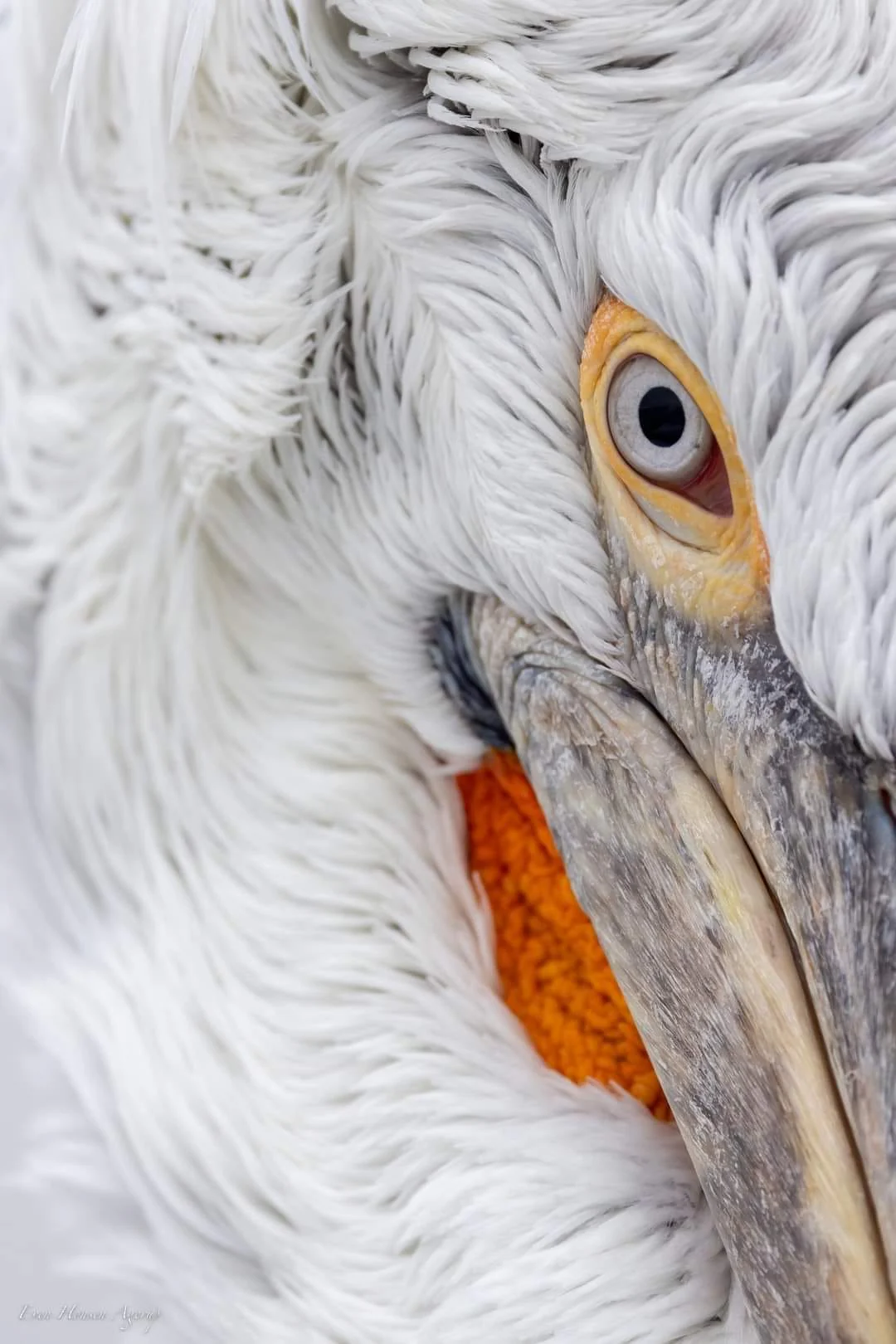
The lake's emblem is the Dalmatian pelican. Kerkini and Porto Lagos together form its most important wintering area in Europe, and since 2003 it has nested here on platforms set up by conservation bodies. In the riparian forest, herons, cormorants and other species nest side by side in mixed colonies.
Water buffalo, otters and thousands of smaller creatures
Kerkini's water buffalo are the largest herd in the country, often seen grazing on the shore or wading into the water. Otters, frogs and eels live here too, and the lake is one of the richest in Greece for freshwater fish.
Records list 11 species of amphibian, 25 of reptile, more than 58 of mammal, 30 of fish, over 1,200 of plant and more than 4,700 invertebrates. Water lilies edge the shore, while oak, beech, lime and fir grow on the surrounding mountains.
The mountains around the lake
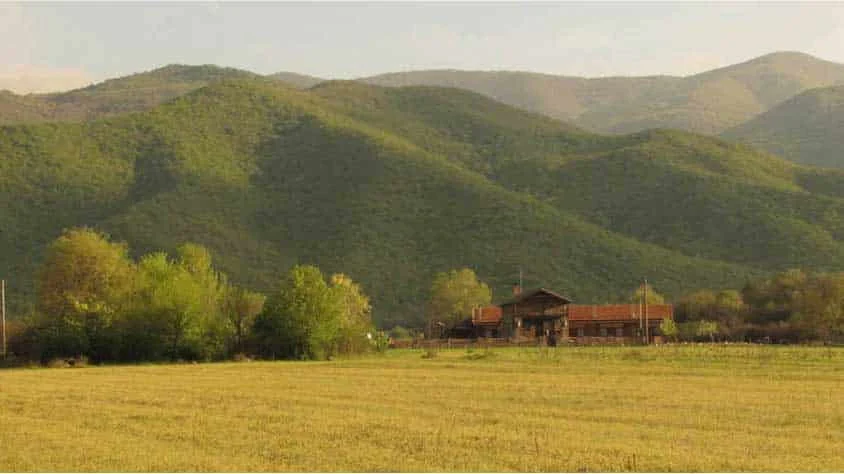
To the north rises Mt Beles (Kerkini), 2,031 metres high, the natural border between Greece and Bulgaria. To the south and south-west stretch Mt Dysoro and the Krousia range (Mavrovouni), up to 1,179 metres.
The trails of the Krousia, through dense oak forest, are where the longer Ichnilatis rides go.
How to visit the lake responsibly
Kerkini is a protected Natura 2000 area. Watch the birds from a distance, do not feed them, and keep to the trails and roads. Binoculars and patience are worth more than a long lens.
The Kerkini Wetland Information Centre in Kerkini village is worth a visit before you go out on the water.

The lake is waiting. So are the horses.
Tell us your dates and how many you are. We will suggest the right room and the activities that suit the season.